Cairn website draft · Registration is not connected
Register your interest

A workspace for language educators

Teach your way.
Take back your time.

You know the learning you want to create. Finding the right materials, adapting them for different learners and preparing each lesson can take longer than the teaching itself. There are often ideas you would like to try, or individual needs you would like to address, if you had more time.

Cairn is being developed to help you do that work more quickly. It helps you draw on what you know about your learners, create and adapt materials, and make decisions about what to do next. You decide what fits your teaching.

We’re starting with independent language educators.

Start with what you need to do

Bring Cairn a task, a question, an idea or a resource you already use. Talk through what you’re trying to achieve, ask for a draft and change it until it works for you. Cairn can draw on relevant research and teaching evidence alongside what you know about your learners.

The work can carry over from one lesson to the next. If you noticed last week that a learner needed more time to think before answering, that observation can be there when you plan what to do with them next.

Some ways you could use Cairn

These are examples of the support we’re developing. You can start with your own task or question.

01

Plan a course, lesson or activity

Start with a learning goal and build activities towards it. For example, a learner can use new vocabulary in an exercise but struggles to use it in conversation. You could plan a lesson that moves from supported practice towards speaking more freely.

02

Create or adapt materials

Make something new or change what you already have to suit a learner. For example, you could take an article you use with one group and turn it into a shorter reading task with more support for another.

03

Understand a learner or group’s needs

Look at their goals, work and your observations to decide where to focus. For example, you could look across a group’s writing to spot a difficulty several learners share, while identifying who needs a different follow-up.

04

Review what happened in a lesson

Think through what learners managed, where they needed help and what to try next. For example, if a learner completed an activity with prompts from you, you could work out what they can now do independently and where they still need support.

05

Develop your teaching practice

Explore a teaching question and consider what evidence and experience suggest. For example, if only a few learners speak during group activities, you could examine why and choose a change to try in the next lesson.

06

Find, use and share resources

Find materials that fit your purpose and adapt them for your learners. For example, you could find a speaking activity created by another educator and change it for your group. We also want educators to be able to share resources they make.

See one example in action

Alex is preparing learning for Maya, who wants to respond more confidently to unexpected questions at work. The video follows one part of their work together.

The interactive demo follows Alex and Maya through preparation, teaching and reflection. Afterwards, you can explore how Alex plans a course, works with a Business English group and adapts a reading for another learner.

This is one possible use of Cairn, not the limit of what you can do with it. The demo shows the product we’re working towards; some features are still in development.

Read the transcript

Alex loves teaching, but a good lesson takes more than the time spent teaching. Reviewing how each learner is getting on, deciding what comes next, and preparing lessons that fit their needs and goals often takes them into the evening.

With Cairn, Alex can draw on what he and his learners have already done without spending his evening finding the useful bits and piecing them together. Today, he's preparing for Maya. Her prepared updates are clear. Unexpected follow-up questions are harder.

He uses Cairn to examine his observations and think through what Maya needs to practise.

Through the conversation, Alex shapes a roleplay. Cairn helps develop the materials, and Alex refines them to fit his purpose.

In the lesson, Maya pauses, clarifies and answers.

When Alex rushes the next question, her answer becomes muddled.

Afterwards, Alex uses Cairn to examine what happened. He decides to try giving Maya more thinking time with help available.

Two weeks later, that reflection helps him prepare a new roleplay, building on experience, adapting to Maya, and keeping decisions in his hands.

Cairn. Teach your way. Take back your time.
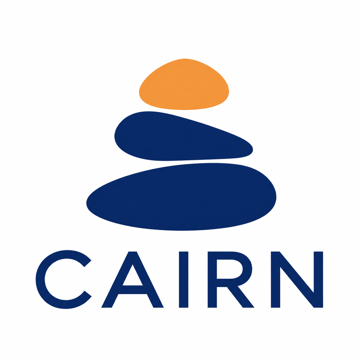
Preview of the Cairn guided concept prototype

Explore the concept

Try the guided prototype.

Start with Alex and Maya’s story. Then explore three more examples from Alex’s teaching if you want to see what else Cairn could help with.

This is a fictional, scripted concept example. It does not show the live product.

Explore the demo

Self-guided · Nothing to type · Opens in a new tab

Knowledge into practice.
Practice back into knowledge.

Cairn aims to bring research and teaching evidence together with educators’ experience, judgement and what learners say and do. You can put relevant knowledge to work while making your own decisions.

Teaching can also add to what we know. If an educator notices that a learner answers unfamiliar questions more clearly after time to think, they might change the next lesson. Similar observations from other educators could be examined alongside research, then help Cairn support someone facing the same question. That is the educational intelligence we want to build: knowledge into practice, and practice back into knowledge.

Built from teaching experience, shaped with educators

Cairn grew out of more than ten years of teaching across classrooms, tutoring and online learning. Conversations, workshops and prototype sessions with other educators continue to shape it.

We’re developing Cairn with independent language educators and testing how it fits into real teaching work. We hope to support other educators and settings as it develops.

Before you register

What happens next?

Can I use Cairn now?

Cairn is in development and access is limited. Registering lets you hear when opportunities to try it become available.

Does registering guarantee early access?

No. Invitations depend on what we’re testing and the educators we need to hear from. Joining the updates list does not commit you to any research or testing.

Will Cairn cost anything?

Pricing has not been decided. Any invitation to try Cairn will clearly explain the terms before you choose whether to take part.